
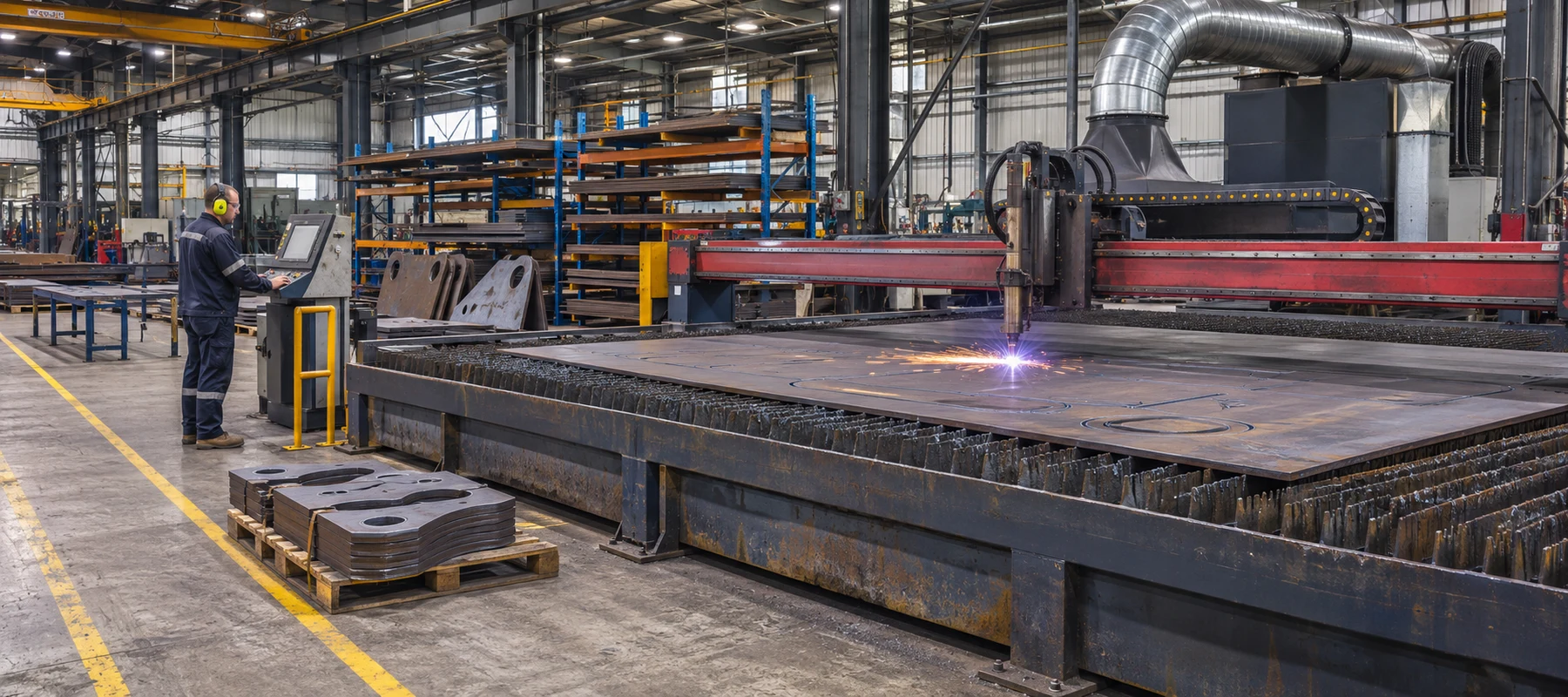
Case-study basis. The baseline and operational findings come from a historical three-day study across three shifts. The study findings were implemented as part of proven improvements, as confirmed by the project owner. The supplementary recovery calculation is a separate modelled example, not a measured post-implementation result. Personal and equipment identifiers have been omitted.
Executive summary
Purpose of the study: establish Material Preparation (Matprep) labour utilisation. Five observers, all Industrial Engineers, conducted the study over three days, covering all three shifts. They recorded how labour activity was distributed across working, idle and away-from-workplace categories. The operational comments provided context for interpreting that utilisation. The original report states a 95% confidence level and 5% standard error.
Downstream production depends on material arriving ready for use. In Material Preparation, cutting, bending and weld-preparation work can be interrupted by an unavailable forklift, a crane handling another load or an empty pallet that has not arrived.
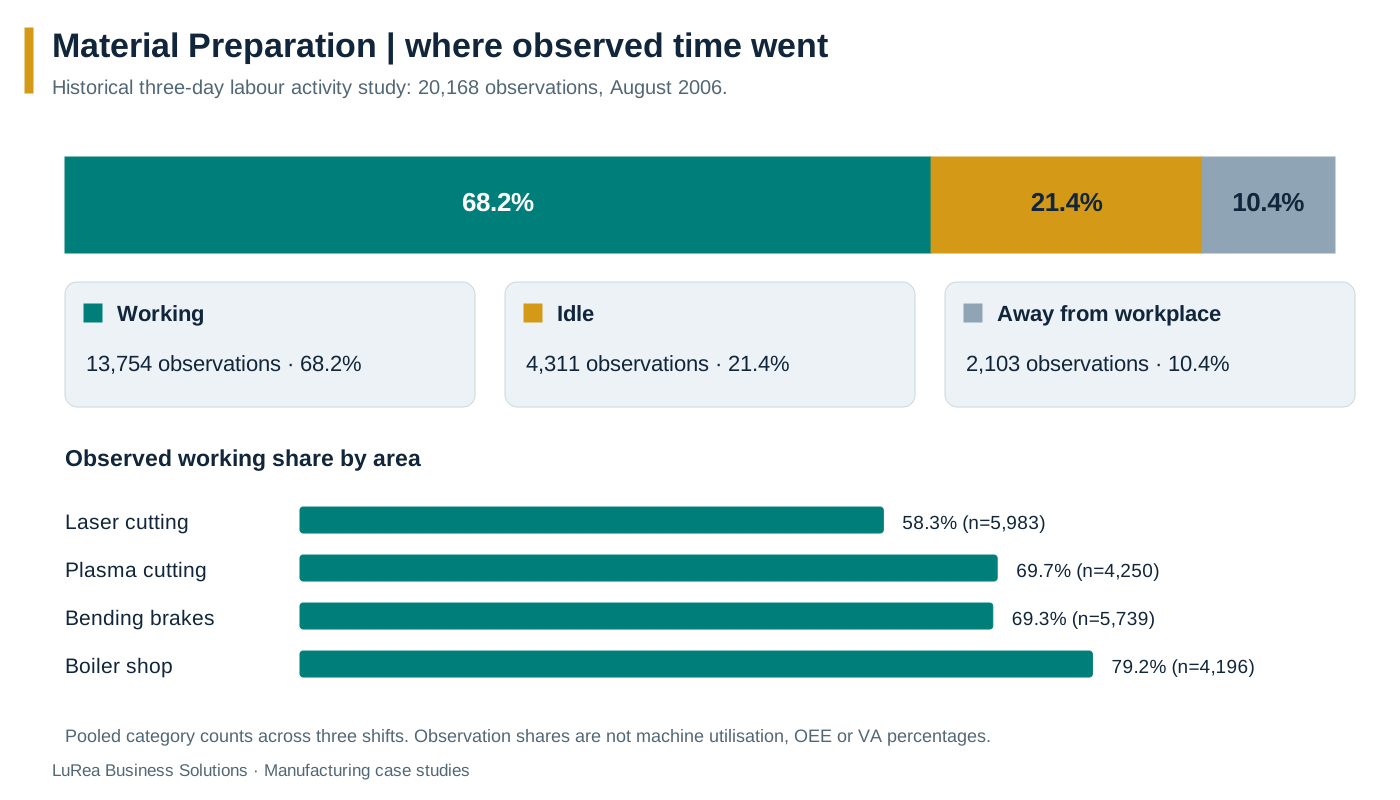
The historical study classified 20,168 observations as working, idle or away from the workplace. Recalculation from the category counts gives 68.2% working, 21.4% idle and 10.4% away. The accompanying observations identified handling, material-supply and work-organisation issues. The findings were translated into implemented improvement actions to improve labour utilisation.
LuRea’s DMAIC approach connects the measured baseline with a waste walk, cause verification, implementation and follow-up. The objective is reliable material supply and better use of existing resources, supported by evidence of improved delivery and quality.
Following a day in the life of the operation
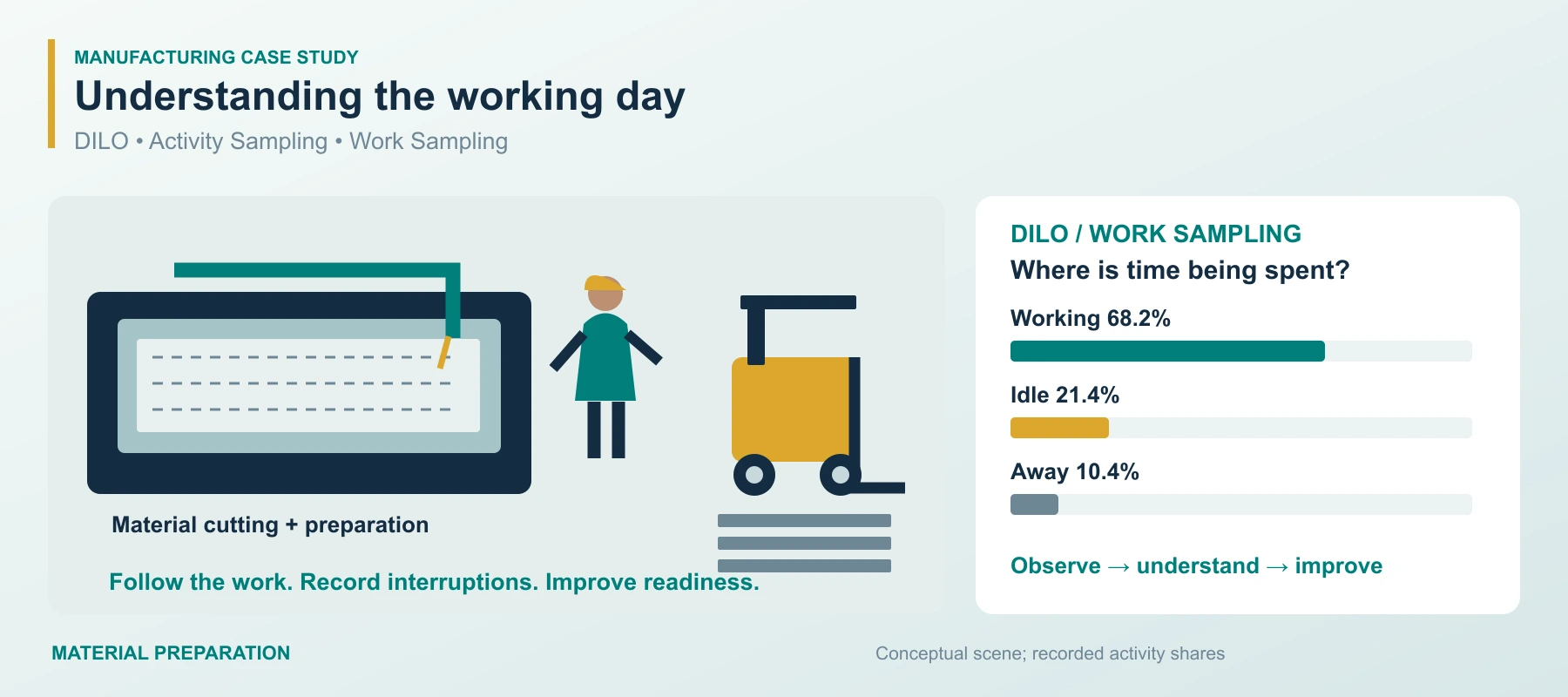
A DILO (Day in the Life Of) study, also referred to as Activity Sampling or Work Sampling, examines how time is spent and where work is interrupted. This case uses the terms interchangeably. The observation record and activity definitions establish how the study was carried out.
Here, the recorded baseline classifies activity as working, idle or away from the workplace. The accompanying shop-floor notes help explain material requests, forklift availability and operator-assistant interactions. A detailed timed log can add context to those findings. The same approach can be adapted to operators, supervisors or planners, using categories appropriate to the role.
What the study found
The study covers laser cutting, plasma cutting, bending brakes and the boiler shop. Observation records describe operators fetching pallets or material, waiting for forklift and crane support, and seeking qualified assistance. They also identify maintenance interruptions and uneven use of operator and assistant time during automatic cutting.
The data does not justify treating every idle or away observation as avoidable waste. Safe lifting, required assistance, approved breaks and other necessary activities must be understood. Nor does an operator watching a machine automatically indicate that another task can safely be assigned.
A useful waste walk records the cause of the interruption, the resource involved and its effect on the next process. For a late pallet, establish whether the problem is pallet availability, a competing forklift assignment or an unclear collection rule. Each cause calls for a different response.
Turning observations into a better operating routine
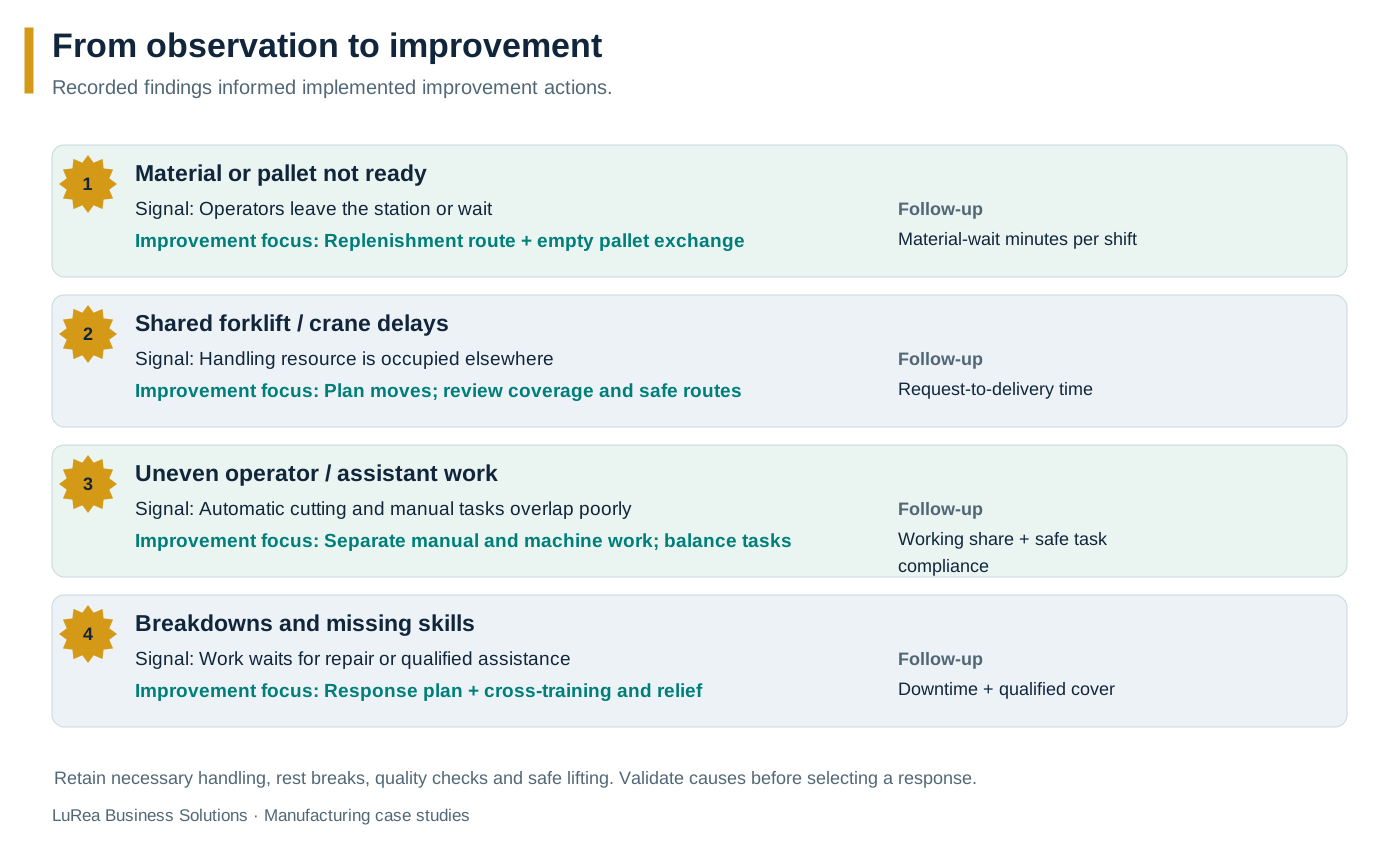
The improvement work addressed material readiness at the beginning of the shift. The findings informed better coordination of plates, empty pallets and the collection of completed parts. The improvement focus was to keep production supplied and reduce avoidable fetching and waiting.
Shared lifting and transport need planned coverage and visible priorities. Review the competing demands from production and receiving before concluding that another forklift is necessary. Where crane reach or travel interrupts other work, investigate the handling method and layout with the people responsible for lifting safety.
Separate manual tasks from automatic machine time and review the operator-assistant balance. Cross-training and relief coverage can reduce delays caused by a missing qualified person. Keep inspection, guarding, supervision and safe staffing requirements in the method.
Implemented improvements
The findings were implemented as part of proven improvements to Material Preparation labour utilisation. The improvement work addressed material and pallet readiness, coordination of forklift and crane support, operator-assistant work organisation and the availability of qualified support.
The case demonstrates how observation findings became practical operating improvements. The reported 68.2% working share is the study baseline. A numerical post-implementation utilisation result is not stated here; the separate recovery calculation in the supporting analysis is a modelled example.
Sustaining the improvements
Sustaining the implemented improvements requires repeat observations across comparable products and shifts, alongside routine review of material supply and handling support. Measure material-wait minutes, request-to-delivery time, complete kits supplied, schedule adherence and first-pass quality alongside working share.
Check that the apparent improvement has not shifted delays to another area or increased stock, overtime or handling risk. Build the accepted routine into standard work, replenishment ownership and daily reviews. Keep the same observation definitions so results remain comparable.
The business value
The implemented improvement work supported better labour utilisation, more dependable material supply and less avoidable interruption to production. The financial evaluation should distinguish capacity released from costs actually avoided. Reduced overtime, deferred equipment expenditure or additional contribution require separate evidence of demand, operating performance and cost impact.
Understanding why work stops provides a better basis for improvement than assuming the solution is more people or more machines.
Explore the observation counts and recovery assumptions
The categories and counts below are retained from the historical study. Rates are recalculated as working observations divided by all category observations in the same row.
| Area | Working | Idle | Away | Total | Working share |
|---|---|---|---|---|---|
| Laser cutting | 3490 | 1998 | 495 | 5983 | 58.3% |
| Plasma cutting | 2963 | 905 | 382 | 4250 | 69.7% |
| Bending brakes | 3976 | 1002 | 761 | 5739 | 69.3% |
| Boiler shop | 3325 | 406 | 465 | 4196 | 79.2% |
| All areas | 13754 | 4311 | 2103 | 20168 | 68.2% |
Several original shift percentages use inconsistent denominators or sum to more than 100%. This review uses the recorded category counts and pools them consistently. The all-shift category counts reconcile to 20,168 observations. Shift observations are not a chronological before-and-after comparison.
The workbook heading states a confidence level and error allowance. This review does not reproduce a confidence interval because the sampling design, independence of observations and allocation by person are not established. Pooled observation shares may not equal workforce-weighted labour-hour shares. The 100-hour interpretation requires the sample to represent those labour hours.
Applying the DILO findings
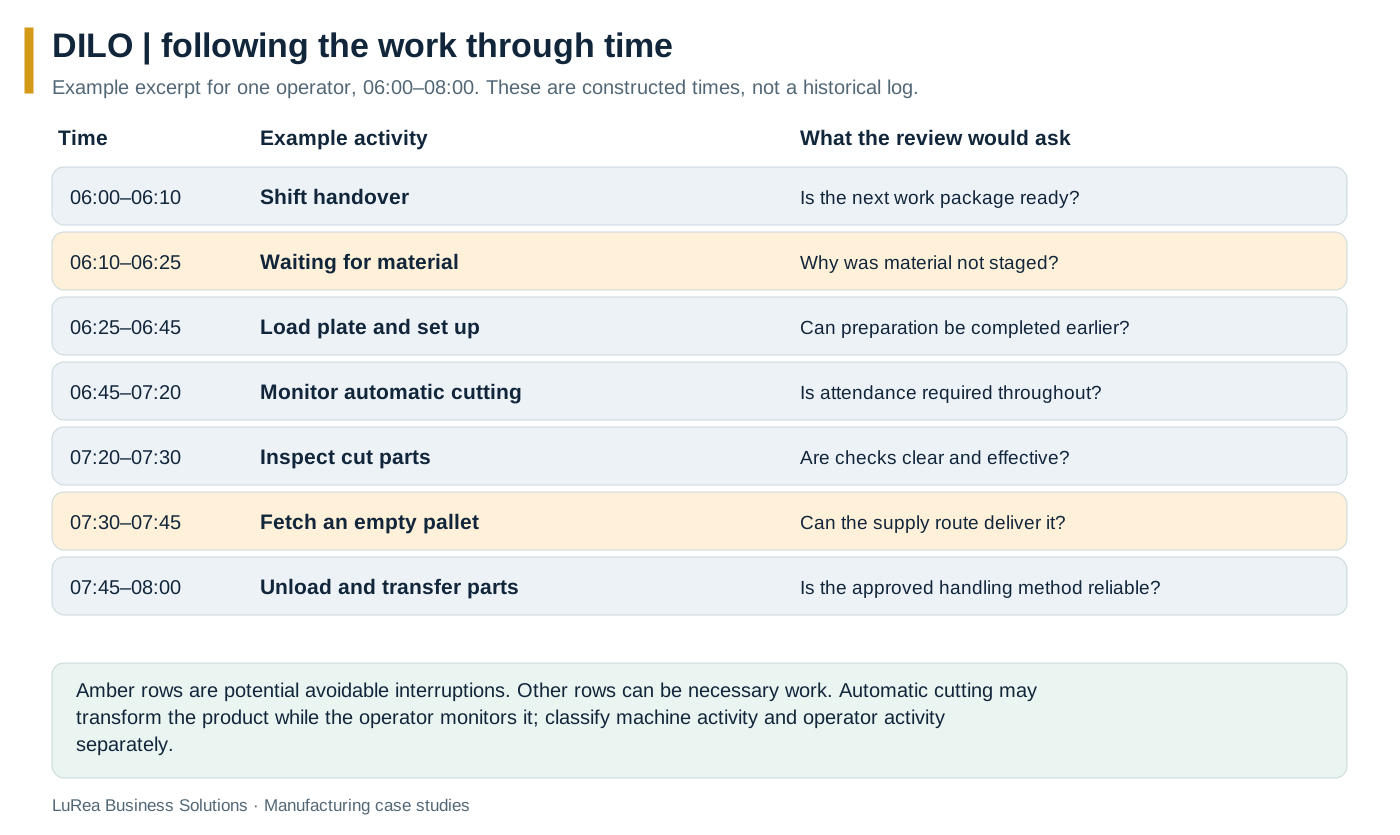
Agree the purpose, role and activity definitions before observing. Record start and finish times, the activity, interruptions, location and relevant work output. Discuss the causes with the person doing the work. Compare the recorded day with the expected routine, then test changes across representative shifts. A planner’s proactive schedule is a proposed standard, not evidence of what happened during an observed shift.
The additional DILO references provide context for role routines and observation records. Their examples and workbook results are not pooled into the Material Preparation baseline. Supporting DILO times shown here are constructed and do not establish measured benefits.
Supplementary recovery calculation
A restrained scenario tests recovery of 25% of idle activity and 15% of away activity. Holding the observation basis constant, working share increases from 68.2% to 75.1%. This is approximately 6.9 additional working hours per 100 representative labour hours.
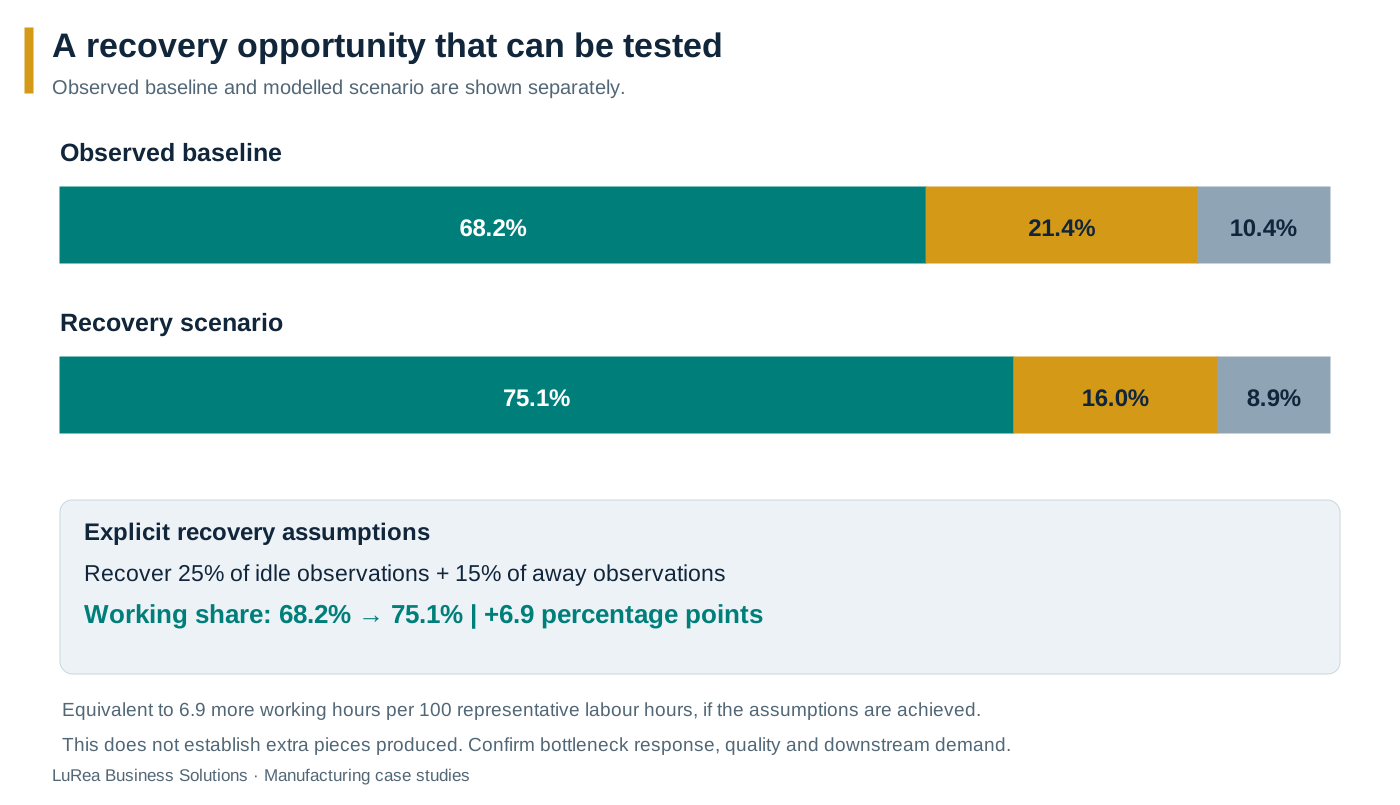
Recovered labour time becomes additional production only where it supports a limiting operation, suitable work is available and downstream processes can accept the output. The study alone does not establish a percentage increase in pieces produced, a headcount reduction or a cash saving.
Recovery calculation
Recovered share = (4,311 ÷ 20,168 × 25%) + (2,103 ÷ 20,168 × 15%) = 6.91 percentage points. Working scenario = 68.20% + 6.91 points = 75.11%.
The recovery fractions are new assumptions, not measured effects. No observations have been reclassified as value-added without reviewing what the work involves. This supplementary calculation is not the measured outcome of the implemented improvements. No quantified financial saving is asserted.